 Inconnu - Inadequate information on toxicity found.
Plant Names

Polanisia dodecandra
Red-whiskered Clammyweed
Polanisie à douze étamines
Synonyms
stinking clammyweed
Plant Characteristics
Couleur de floraison: Rose
Bloom Period: Jul - Sep
Hauteur max: 2,0 feet
Max Width: 2,0 feet
Light Condition:
 Plus de 6 heures d'ensoleillement par jour
Soil conditions:
Plus de 6 heures d'ensoleillement par jour
Soil conditions:
 Tolère des conditions de sol sec
Plus de 6 heures d'ensoleillement par jour
Tolère des conditions de sol sec
Lifespan:
Annuel
des plantes qui ont une durée de vie d'un an
Gardener Experience:
 Ne se propage pas de manière incontrôlable
 Facile à germer
 Self-seeding
Ne se propage pas de manière incontrôlable
Facile à germer
Self-seeding
Landscape Uses:
 Suitable for rock gardens
 Suitable for container garden
 Suitable for school gardens
Suitable for rock gardens
Suitable for container garden
Suitable for school gardens
Ecological Benefits:
No ecological benefits information available.
Tolerates:
 Tolerates limestone conditions
 Tolerates transplantation
Tolerates limestone conditions
Tolerates transplantation
Special Features and Considerations:
Seed and plant distribution status
Semences disponible
Disponible à la table Plein soleil
Disponible à la table Plein soleil
Nous acceptions les semences de cette plante
Faits intéressants
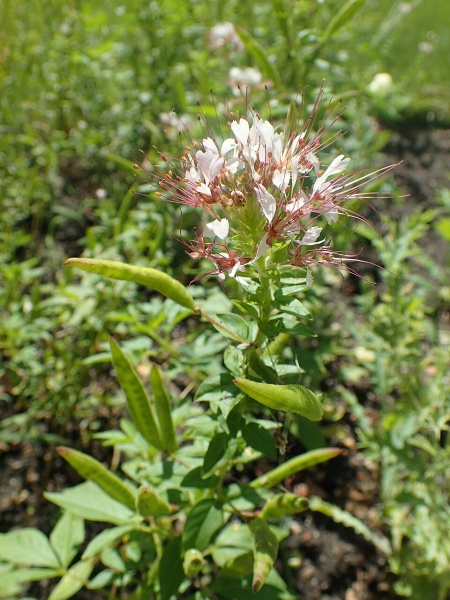
Red-whiskered Clammyweed is an unusual looking plant with sticky, aromatic foliage and distinctive pink to white flowers with long, prominent stamens. It naturally occurs in dry, sandy or rocky soils, open fields, prairies, and disturbed areas. Its unusual flowers and long flowering period make it an interesting addition to a sunny native garden.
Red-whiskered Clammyweed is best for informal, naturalistic, or prairie-style gardens. It is very tolerant of heat and dry soil.
Red-whiskered Clammyweed is best for informal, naturalistic, or prairie-style gardens. It is very tolerant of heat and dry soil.
Plant Location
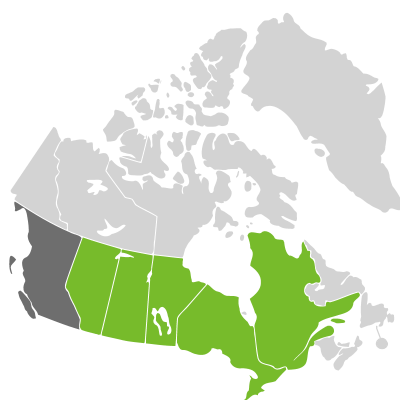
Distribution according to VASCAN
Ephemeral
Native
Introduced
Excluded
Extirpated
Doubtful
Absent
 Canadensis

Thrives in Ecozones
- Plaines boréales
- Prairies
Ecological Benefits
Butterflies Supported by Polanisia dodecandra
No butterfly data available for this plant.
Specialized Bees Supported by Polanisia dodecandra
No bee data available for this plant.
Complementary Plants
- Anemone virginiana
Tall Anemone
Anémone de Virginie - Blephilia ciliata
Downy Wood Mint
Bléphilie ciliée - Oenothera fruticosa
Narrow-leaved Evening-primrose
Onagre frutescente - Sporobolus heterolepis
Prairie Dropseed
Sporobole à glumes inégales - Tradescantia ohiensis
Ohio Spiderwort
Tradescantie d'Ohio
Substitute For Non-Native Plants
- Delphinium (Delphinium)
- Asclepias (Milkweed Cultivars)
- Asclepias curassavica (Tropical Milkweed)
- Cirsium arvense (Canada Thistle)
- Leucanthemum (Shasta Daisy)
- Gerbera (Gerbera Daisy)
- Hesperis matronalis (Dame Rocket)
Sowing Information
Download Seed Envelope Labels (PDF)
- Sowing depth: Couvrir très légèrement
- Sow by March
- Stratification duration: 30 days
- Self-seeding
Harvesting and Seed Sharing
- Harvest start month: September
- Harvesting indicator:
- Pods are slightly open and seeds inside are dark
- Harvesting:
- Ouvrir la gousse, enlever les graines
- Seed viability test:
- Pas de test requis avant le don
- Packaging measure: 1 rounded 1/8 teaspoon
- Seed storage:
- Sécher à l'air dans un sac en papier ou contenant ouvert, pour quelques jours jusqu'à sec
- Secouer de temps à autre pour prévenir la moisissure
- Cultivar: No, you can donate without knowing the source as there are only straight species
- No harvesting video available at this time.
Toxicity Notes
Inadequate information on toxicity found.