 Inconnu - Inadequate information on toxicity found but might be toxic.
Plant Names

Scutellaria lateriflora
Mad-dog Skullcap
Scutellaire latériflore
Synonyms
blue skullcap
side-flowering skullcap
scutellaire à fleurs latérales
Plant Characteristics
Couleur de floraison: Bleu
Bloom Period: Jul - Sep
Hauteur max: 2,0 feet
Max Width: 1,5 feet (spreads by rhizome)
Light Condition:
 Plus de 6 heures d'ensoleillement par jour
 More than 2 or 3 hours but less than 6 hours of direct sun a day
Soil conditions:
More than 2 or 3 hours but less than 6 hours of direct sun a day
Soil conditions:
 Tolerates medium soil condition
 Tolère des conditions de sol humide
Plus de 6 heures d'ensoleillement par jour
More than 2 or 3 hours but less than 6 hours of direct sun a day
Tolerates medium soil condition
Tolère des conditions de sol humide
Lifespan:
Vivace
des plantes qui reviennent année après année
Gardener Experience:
 Spreads by rhizome
 Self-seeding
Spreads by rhizome
Self-seeding
Landscape Uses:
 Souhaitable dans les jardins de zone humide
 Suitable for rain gardens
 Suitable for school gardens
Souhaitable dans les jardins de zone humide
Suitable for rain gardens
Suitable for school gardens
Ecological Benefits:
No ecological benefits information available.
Tolerates:
 Deer resistant
 Rabbit resistant
 Tolerates juglone conditions
 Tolerates transplantation
Deer resistant
Rabbit resistant
Tolerates juglone conditions
Tolerates transplantation
Special Features and Considerations:
Seed and plant distribution status
Semences disponible
Disponible à la table Mi-soleil, humide
Disponible à la table Mi-soleil, humide
Nous acceptions les semences de cette plante
Faits intéressants
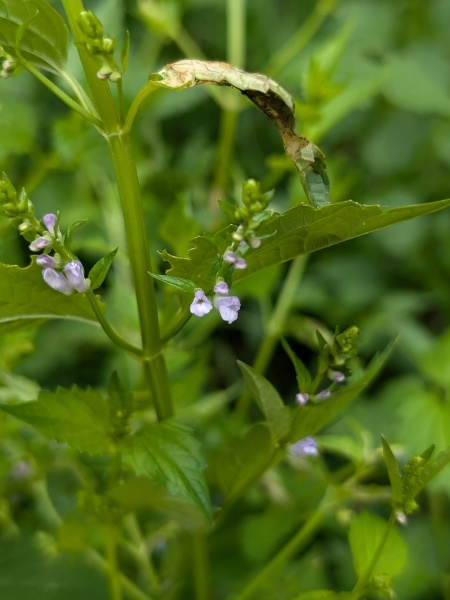
Mad-dog Skullcap has slender, branching stems and small blue to lavender flowers that grow along the sides of the upper stems. It blooms from mid to late summer. It is an excellent choice for a wet meadow, pond edge, or moist woodland garden. It forms a loose, upright clump and is generally well behaved. It can spread by seed in suitable conditions but is not normally aggressive. You have to keep the soil consistently moist, especially during establishment. It can tolerate some standing water for short periods. It can become somewhat floppy in very rich soil or heavy shade; more light usually produces sturdier growth.
Plant Location
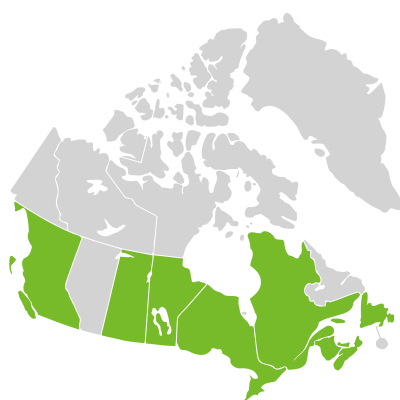
Native to Ottawa region: Oui
Distribution according to VASCAN
Ephemeral
Native
Introduced
Excluded
Extirpated
Doubtful
Absent
 Canadensis

Thrives in Ecozones
- Maritime de l'Atlantique
- Plaines à forêts mixtes
Ecological Benefits
Butterflies Supported by Scutellaria lateriflora
No butterfly data available for this plant.
Specialized Bees Supported by Scutellaria lateriflora
No bee data available for this plant.
Complementary Plants
- Chelone glabra
White Turtlehead
Galane glabre - Gentiana andrewsii
Closed Bottle Gentian
Gentiane d'Andrews - Geum rivale
Water Avens
Benoîte des ruisseaux - Iris versicolor
Harlequin Blue Flag Iris
Iris versicolore - Scirpus pendulus
Hanging Bulrush
Scirpe pendant
Substitute For Non-Native Plants
- Lamium (Dead nettle)
- Ajuga reptans (Bugleweed)
- Salvia (Non-Native Sage)
- Baptisia (False Indigo)
- Lavandula (Lavender)
- Liatris (Blazing Star Cultivar)
Sowing Information
Download Seed Envelope Labels (PDF)
- Sowing depth: Surface sow
- Sow by February
- Stratification duration: 60 days
- Self-seeding
Harvesting and Seed Sharing
- Harvest start month: August
- Harvesting indicator:
- Pods are brown, seeds are dark, and crisp, and little stem connecting the pod to the main stem is brown (not green)
- Harvesting:
- Cut stem (including pods), let air dry in paper bag, then shake seeds off after a few days
- Seed viability test:
- Pas de test requis avant le don
- Packaging measure: 1 rounded 1/32 teaspoon
- Seed storage:
- Sécher à l'air dans un sac en papier ou contenant ouvert, pour quelques jours jusqu'à sec
- Secouer de temps à autre pour prévenir la moisissure
- Cultivar: No, you can donate without knowing the source as there are only straight species
- Remove non-seed material
- Harvesting video: Watch here
Toxicity Notes
Inadequate information on toxicity found but might be toxic.