 Connu comme étant toxique - Toxic to pets and humans if ingested.
Plant Names

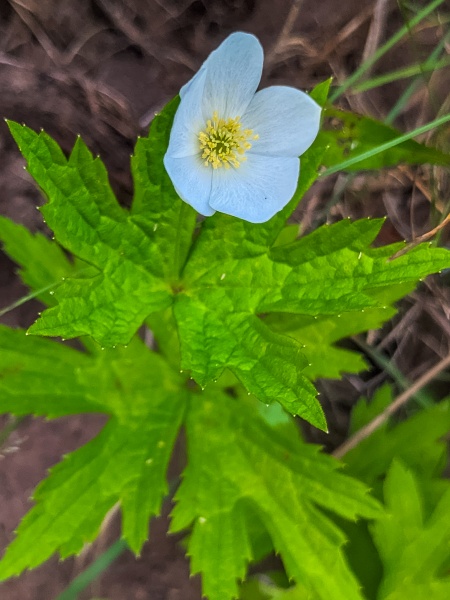
Anemone cylindrica
Long-headed Anemone
Anémone cylindrique
Synonyms
candle anemone
long-fruited anemone
long-headed thimbleweed
thimbleweed
Plant Characteristics
Couleur de floraison: Blanc
Bloom Period: Jun - Jul
Hauteur max: 2,0 feet
Max Width: 0,7 feet (spreads by rhizome)
Light Condition:
 Plus de 6 heures d'ensoleillement par jour
 More than 2 or 3 hours but less than 6 hours of direct sun a day
Soil conditions:
More than 2 or 3 hours but less than 6 hours of direct sun a day
Soil conditions:
 Tolère des conditions de sol sec
 Tolerates medium soil condition
Plus de 6 heures d'ensoleillement par jour
More than 2 or 3 hours but less than 6 hours of direct sun a day
Tolère des conditions de sol sec
Tolerates medium soil condition
Lifespan:
Vivace
des plantes qui reviennent année après année
Gardener Experience:
 Ne se propage pas de manière incontrôlable
 Spreads by rhizome
 Facile à germer
 Self-seeding
Ne se propage pas de manière incontrôlable
Spreads by rhizome
Facile à germer
Self-seeding
Landscape Uses:
 Suitable for rock gardens
 Suitable for container garden
 Suitable for school gardens
Suitable for rock gardens
Suitable for container garden
Suitable for school gardens
Ecological Benefits:
No ecological benefits information available.
Tolerates:
 Deer resistant
 Rabbit resistant
 Tolerates limestone conditions
 Tolerates juglone conditions
 Tolerates transplantation
Deer resistant
Rabbit resistant
Tolerates limestone conditions
Tolerates juglone conditions
Tolerates transplantation
Special Features and Considerations:
 This plant causes skin rashes
This plant causes skin rashes
Seed and plant distribution status
No seeds available for this plant.
Nous acceptions les semences de cette plante
Faits intéressants
Long-headed Anemone is best suited for prairie gardens, naturalized meadows, and moist open areas, where its upright stems and greenish-white summer blooms add subtle vertical interest. After flowering, the centre elongates into cylindrical seed heads that catch the wind, providing a second season of visual appeal. It prefers well-drained soils. It spreads modestly, allowing it to naturalize without overtaking smaller garden plants. Pollinators visit in the summer, and its low-maintenance habit makes it a hands-off native perennial. Its common names all refer to the distinctive cylindrical seed head, which looks like a thimble or candle after flowering.
Plant Location
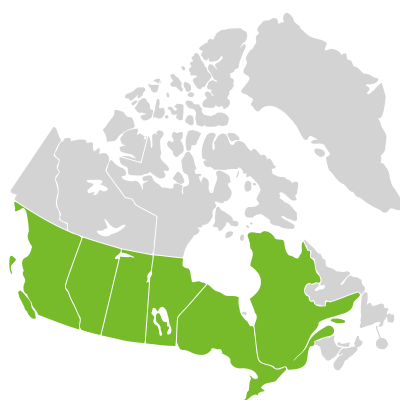
Native to Ottawa region: Oui
Distribution according to VASCAN
Ephemeral
Native
Introduced
Excluded
Extirpated
Doubtful
Absent
 Canadensis

Thrives in Ecozones
- Plaines boréales
- Cordillière montagnarde
- Prairies
- Plaines à forêts mixtes
Ecological Benefits
Butterflies Supported by Anemone cylindrica
No butterfly data available for this plant.
Specialized Bees Supported by Anemone cylindrica
No bee data available for this plant.
Complementary Plants
- Agastache scrophulariifolia
Purple Giant Hyssop
Agastache à feuilles de scrofulaire - Amorpha canescens
Leadplant
Faux-indigo blanchissant - Elymus canadensis
Canada Wild Rye
Élyme du Canada - Oenothera gaura
Biennial Gaura
Gaura bisannuel - Rudbeckia laciniata
Cut-leaved Coneflower
Rudbeckie laciniée
Substitute For Non-Native Plants
- Hydrangea (Hydrangea)
- Aegopodium podagraria (Goutweed)
- Convallaria majalis (Lily of the Valley)
- Polygonatum odoratum).1 (Solomon's Seal)
- Lysimachia nummularia (Creeping Jenny)
Sowing Information
Download Seed Envelope Labels (PDF)
- Sowing depth: Couvrir très légèrement
- Sow by February
- Stratification duration: 60 days
- Self-seeding
Harvesting and Seed Sharing
- Harvest start month: August
- Harvesting indicator:
- Seeds have become fluffy and can be easily removed by shaking on gently pulling off from stem
- Harvesting:
- Utiliser la main pour détacher de la tige principale
- Seed viability test:
- Pas de test requis avant le don
- Packaging measure: A dozen (12) seeds (eyeball)
- Seed storage:
- Sécher à l'air dans un sac en papier ou contenant ouvert, pour quelques jours jusqu'à sec
- Secouer de temps à autre pour prévenir la moisissure
- Cultivar: Yes, do not donate unless you know source, and there are no known cultivars in your garden or at proximity
- No harvesting video available at this time.
Toxicity Notes
Toxic to pets and humans if ingested.