 Inconnu - Inadequate information on toxicity if ingested but the seeds can become foreign bodies in the eyes, toes, ears etc of pets.
Plant Names

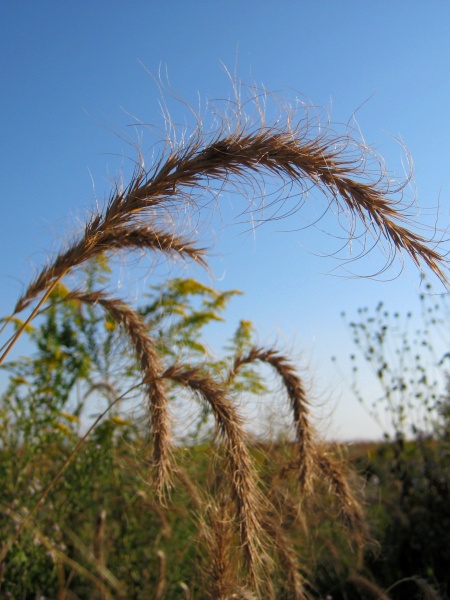
Elymus canadensis
Canada Wild Rye
Élyme du Canada
Synonyms
Great Plains wildrye
nodding wildrye
Plant Characteristics
Couleur de floraison: Vert
Bloom Period: Jul - Sep
Hauteur max: 5,0 feet
Max Width: 3,0 feet (spreads by rhizome)
Light Condition:
 Plus de 6 heures d'ensoleillement par jour
 More than 2 or 3 hours but less than 6 hours of direct sun a day
Soil conditions:
More than 2 or 3 hours but less than 6 hours of direct sun a day
Soil conditions:
 Tolère des conditions de sol sec
 Tolerates medium soil condition
Plus de 6 heures d'ensoleillement par jour
More than 2 or 3 hours but less than 6 hours of direct sun a day
Tolère des conditions de sol sec
Tolerates medium soil condition
Lifespan:
Vivace
des plantes qui reviennent année après année
Gardener Experience:
 Ne se propage pas de manière incontrôlable
 Spreads by rhizome
 Facile à germer
 Self-seeding
Ne se propage pas de manière incontrôlable
Spreads by rhizome
Facile à germer
Self-seeding
Landscape Uses:
 Suitable for rock gardens
 Suitable for rain gardens
 Tolerates boulevard garden conditions
Suitable for rock gardens
Suitable for rain gardens
Tolerates boulevard garden conditions
Ecological Benefits:
 Supports birds
 Supports pollinators
Supports birds
Supports pollinators
Tolerates:
 Tolerates drought conditions
 Tolerates salt conditions
 Tolerates limestone conditions
 Tolerates juglone conditions
Tolerates drought conditions
Tolerates salt conditions
Tolerates limestone conditions
Tolerates juglone conditions
Special Features and Considerations:
Seed and plant distribution status
Semences disponible
Disponible à la table Mi-soleil, sec
Disponible à la table Mi-soleil, sec
Nous acceptions les semences de cette plante
Faits intéressants
Canada Wild Rye is tolerant of heavy metals and can revegetate mine tailing areas, and stabilize soils. It is a short lived, early succession, matrix species that conditions the soil, then makes way for the next species to move in. The grass leaves are used as nesting material, and the seeds are eaten by granivorous birds and small mammals.
Canada Wild Rye is very accommodating, being well behaved and growing in a range of conditions. Being a cool season grass it grows in the spring and fall when the soil temperatures are cool. The cut dried seed stalks make a nice addition to dried flower arrangements.
Canada Wild Rye is very accommodating, being well behaved and growing in a range of conditions. Being a cool season grass it grows in the spring and fall when the soil temperatures are cool. The cut dried seed stalks make a nice addition to dried flower arrangements.
Plant Location
Native to Ottawa region: Oui
Distribution according to VASCAN
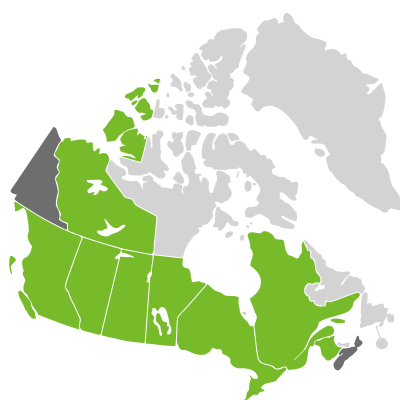
Ephemeral
Native
Introduced
Excluded
Extirpated
Doubtful
Absent
 Canadensis

Thrives in Ecozones
- Taïga des plaines
- Plaines boréales
- Prairies
- Plaines à forêts mixtes
Ecological Benefits
Butterflies Supported by Elymus canadensis
No butterfly data available for this plant.
Specialized Bees Supported by Elymus canadensis
No bee data available for this plant.
Complementary Plants
- Agastache scrophulariifolia
Purple Giant Hyssop
Agastache à feuilles de scrofulaire - Amorpha canescens
Leadplant
Faux-indigo blanchissant - Anemone cylindrica
Long-headed Anemone
Anémone cylindrique - Oenothera gaura
Biennial Gaura
Gaura bisannuel - Rudbeckia laciniata
Cut-leaved Coneflower
Rudbeckie laciniée
Substitute For Non-Native Plants
- Miscanthus (Silvergrass)
- Pennisetum setaceum (Fountain Grass)
Sowing Information
Download Seed Envelope Labels (PDF)
- Sowing depth: Couvrir très légèrement
- Sow anytime
- Stratification duration: 0 days
- Self-seeding
- Notes: Can be sown in late spring in warm soil.
Harvesting and Seed Sharing
- Harvest start month: September
- Harvesting indicator:
- Seeds easily fall off when you gently pull them off
- Harvesting:
- Utiliser la main pour détacher de la tige principale
- Seed viability test:
- Pas de test requis avant le don
- Packaging measure: A dozen (12) seeds (eyeball)
- Seed storage:
- Sécher à l'air dans un sac en papier ou contenant ouvert, pour quelques jours jusqu'à sec
- Secouer de temps à autre pour prévenir la moisissure
- Cultivar: No, you can donate without knowing the source as there are only straight species
- Harvesting video: Watch here
Toxicity Notes
Inadequate information on toxicity if ingested but the seeds can become foreign bodies in the eyes, toes, ears etc of pets.