 Inconnu - Inadequate information on toxicity found.
Plant Names

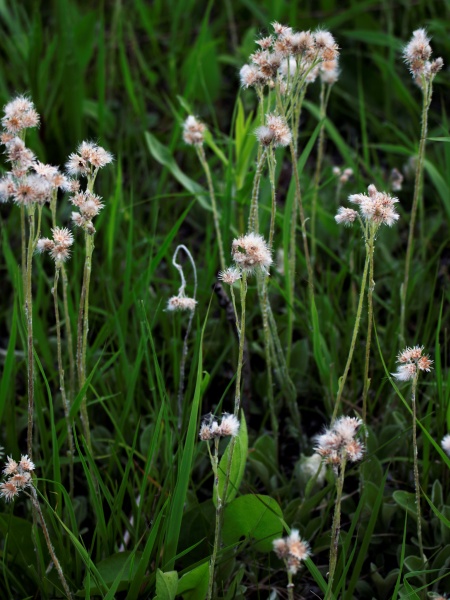
Antennaria parlinii
Parlin's Pussytoes
Antennaire de Parlin
Plant Characteristics
Couleur de floraison: Blanc
Bloom Period: Apr - Jun
Hauteur max: 1,5 feet
Max Width: 0,5 feet
Light Condition:
 Plus de 6 heures d'ensoleillement par jour
 More than 2 or 3 hours but less than 6 hours of direct sun a day
Soil conditions:
More than 2 or 3 hours but less than 6 hours of direct sun a day
Soil conditions:
 Tolère des conditions de sol sec
 Tolerates medium soil condition
Plus de 6 heures d'ensoleillement par jour
More than 2 or 3 hours but less than 6 hours of direct sun a day
Tolère des conditions de sol sec
Tolerates medium soil condition
Lifespan:
Vivace
des plantes qui reviennent année après année
Plant is
dioecious
Need a male and female plant to produce seeds
Gardener Experience:
 Suitable for beginner gardeners
 Ne se propage pas de manière incontrôlable
 Self-seeding
Suitable for beginner gardeners
Ne se propage pas de manière incontrôlable
Self-seeding
Landscape Uses:
 Suitable for rock gardens
 Suitable for Right of Way gardens
 Suitable for container garden
 Tolerates boulevard garden conditions
Suitable for rock gardens
Suitable for Right of Way gardens
Suitable for container garden
Tolerates boulevard garden conditions
Ecological Benefits:
 Butterfly host
Butterfly host
Tolerates:
 Deer resistant
 Rabbit resistant
 Tolerates juglone conditions
 Tolerates transplantation
Deer resistant
Rabbit resistant
Tolerates juglone conditions
Tolerates transplantation
Special Features and Considerations:
 This plant is septic tank safe
This plant is septic tank safe
Seed and plant distribution status
No seeds available for this plant.
Nous acceptions les semences de cette plante
Faits intéressants
Parlin’s Pussytoes is a low-growing, mat-forming wildflower perfect for dry prairies, open woodlands, and rocky slopes. In spring, slender stems rise above silvery mats, topped with tiny white flowers that resemble cat paws, giving the plant its charming name. It spreads slowly by stolons, tolerates sunny, dry soils, and attracts native pollinators. Its subtle, soft texture makes it an ideal choice for prairie-style plantings or low-maintenance groundcovers that gently fill in spaces without overwhelming nearby plants.
Plant Location
Native to Ottawa region: Oui
Distribution according to VASCAN
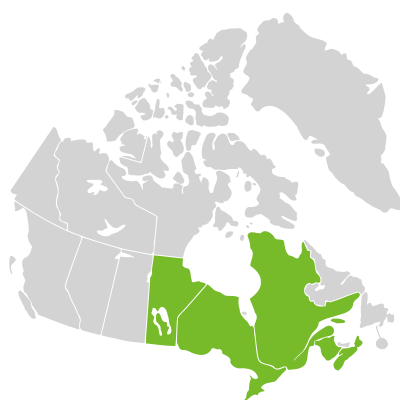
Ephemeral
Native
Introduced
Excluded
Extirpated
Doubtful
Absent
 Canadensis

Thrives in Ecozones
- Plaines boréales
- Prairies
- Plaines à forêts mixtes
Ecological Benefits
Butterflies Supported by Antennaria parlinii
-
Eutricopis nexilis
White-spotted Midget -
Tebenna gnaphaliella
Everlasting Tebenna -
Telethusia ovalis
Oval telethusia -
Vanessa virginiensis
American Lady - Vanesse de Virginie
Specialized Bees Supported by Antennaria parlinii
No bee data available for this plant.
Complementary Plants
- Antennaria howellii
Howell's Pussytoes
Antennaire de Howell - Fragaria virginiana
Virginia Strawberry
Fraisier des champs - Plantago rugelii
Rugel's Plantain
Plantain de Rugel - Sisyrinchium angustifolium
Narrow-leaved Blue-eyed Grass
Bermudienne à feuilles étroites - Sisyrinchium montanum
Strict Blue-eyed-grass
Bermudienne montagnarde
Substitute For Non-Native Plants
- Ajuga reptans (Bugleweed)
- Convallaria majalis (Lily of the Valley)
- Iridaceae (Crocus)
- Scilla siberica (Siberian Squill)
- Tulipa (Tulips)
Sowing Information
Download Seed Envelope Labels (PDF)
- Sowing depth: Surface sow
- Sow anytime
- Stratification duration: 0 days
- Self-seeding
Harvesting and Seed Sharing
- Harvest start month: June
- Harvesting indicator:
- Seeds have become fluffy and can be easily removed by shaking on gently pulling off from stem
- Harvesting:
- Utiliser la main pour détacher de la tige principale
- Seed viability test:
- Pas de test requis avant le don
- Packaging measure: 1 rounded 1/4 teaspoon
- Seed storage:
- Sécher à l'air dans un sac en papier ou contenant ouvert, pour quelques jours jusqu'à sec
- Secouer de temps à autre pour prévenir la moisissure
- Cultivar: No, you can donate without knowing the source as there are only straight species
- Harvesting video: Watch here
Toxicity Notes
Inadequate information on toxicity found.