 Pas connu comme étant toxique - Not toxic as per ASPCA.
Plant Names

Fragaria virginiana
Virginia Strawberry
Fraisier des champs
Synonyms
scarlet strawberry
thick-leaved strawberry
wild strawberry
fraise des champs
fraisier de Virginie
Plant Characteristics
Couleur de floraison: Blanc
Bloom Period: Apr - May
Hauteur max: 0,5 feet
Max Width: 0,5 feet (spreads by rhizome)
Light Condition:
 Plus de 6 heures d'ensoleillement par jour
 More than 2 or 3 hours but less than 6 hours of direct sun a day
Soil conditions:
More than 2 or 3 hours but less than 6 hours of direct sun a day
Soil conditions:
 Tolerates medium soil condition
Plus de 6 heures d'ensoleillement par jour
More than 2 or 3 hours but less than 6 hours of direct sun a day
Tolerates medium soil condition
Lifespan:
Vivace
des plantes qui reviennent année après année
Gardener Experience:
 Spreads by rhizome
 Self-seeding
Spreads by rhizome
Self-seeding
Landscape Uses:
 Suitable for rock gardens
 Suitable for Right of Way gardens
 Suitable for rain gardens
 Suitable for container garden
 Suitable for school gardens
 Suitable for ground cover
 Tolerates boulevard garden conditions
Suitable for rock gardens
Suitable for Right of Way gardens
Suitable for rain gardens
Suitable for container garden
Suitable for school gardens
Suitable for ground cover
Tolerates boulevard garden conditions
Ecological Benefits:
 Supports birds
 Butterfly host
Supports birds
Butterfly host
Tolerates:
 Tolerates drought conditions
 Tolerates salt conditions
 Tolerates limestone conditions
 Tolerates sandy conditions
 Tolerates juglone conditions
Tolerates drought conditions
Tolerates salt conditions
Tolerates limestone conditions
Tolerates sandy conditions
Tolerates juglone conditions
Special Features and Considerations:
Seed and plant distribution status
Semences disponible
Disponible à la table Plein soleil, moyen
Disponible à la table Plein soleil, moyen
Nous acceptions les semences de cette plante
Faits intéressants
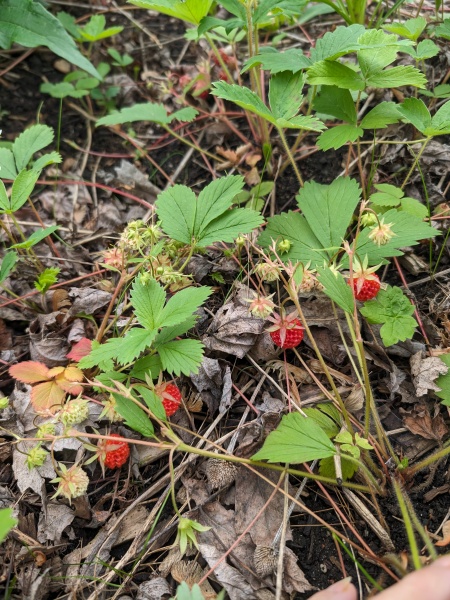
Virginia Strawberry produces white spring flowers followed by small, sweet, strawberries. It adapts to a wide range of soils. It is easy to control if necessary. It is great for filling gaps between taller perennials.
Plant Location
Native to Ottawa region: Oui
Distribution according to VASCAN
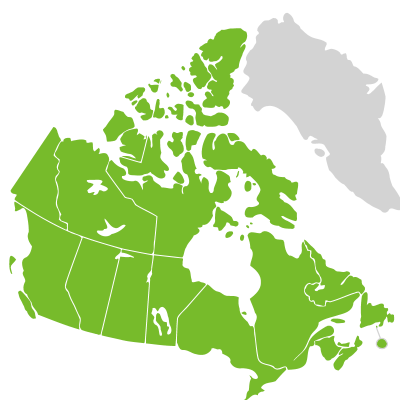
Ephemeral
Native
Introduced
Excluded
Extirpated
Doubtful
Absent
 Canadensis

Thrives in Ecozones
- Taïga des plaines
- Maritime de l'Atlantique
- Taïga du Bouclier
- Plaines boréales
- Cordillière montagnarde
- Prairies
- Plaines hudsoniennes
- Bouclier boréal
- Maritime du Pacifique
- Plaines à forêts mixtes
Ecological Benefits
Butterflies Supported by Fragaria virginiana
-
Euxoa messoria
Reaper dart -
Olethreutes permundana
Raspberry Leafroller -
Pyrrhia exprimens
Purple Lined Sallow -
Xestia smithii
Smith's Dart
Specialized Bees Supported by Fragaria virginiana
No bee data available for this plant.
Complementary Plants
- Antennaria howellii
Howell's Pussytoes
Antennaire de Howell - Antennaria parlinii
Parlin's Pussytoes
Antennaire de Parlin - Plantago rugelii
Rugel's Plantain
Plantain de Rugel - Sisyrinchium angustifolium
Narrow-leaved Blue-eyed Grass
Bermudienne à feuilles étroites - Sisyrinchium montanum
Strict Blue-eyed-grass
Bermudienne montagnarde
Substitute For Non-Native Plants
- Ajuga reptans (Bugleweed)
- Lysimachia nummularia (Creeping Jenny)
- Vinca major and Vinca minor (Periwinkle)
- Hedera helix (English Ivy)
- Glechoma hederacea (Creeping Charlie)
Sowing Information
Download Seed Envelope Labels (PDF)
- Sowing depth: Couvrir très légèrement
- Sow by February
- Stratification duration: 60 days
- Self-seeding
- Notes: Soak for 12h.
Harvesting and Seed Sharing
- Harvest start month: June
- Harvesting indicator:
- Berries are ripen and easily fall off or have fallen off
- Harvesting:
- Squeeze berries to extract seeds, wash with soapy water to remove flesh, rinse throroughly using a strainer
- Seed viability test:
- Pas de test requis avant le don
- Packaging measure: 1 rounded 1/32 teaspoon
- Seed storage:
- Garder humide et frais, danssac refermable au frigo, avec graines dans de terre, papier essuie-tout, filtre à café ou vermiculite, jusqu'au don
- Cultivar: Yes, do not donate unless you know source, and there are no known cultivars in your garden or at proximity
- Remove non-seed material
- No harvesting video available at this time.
Toxicity Notes
Not toxic as per ASPCA.