 Inconnu - Inadequate information on toxicity found.
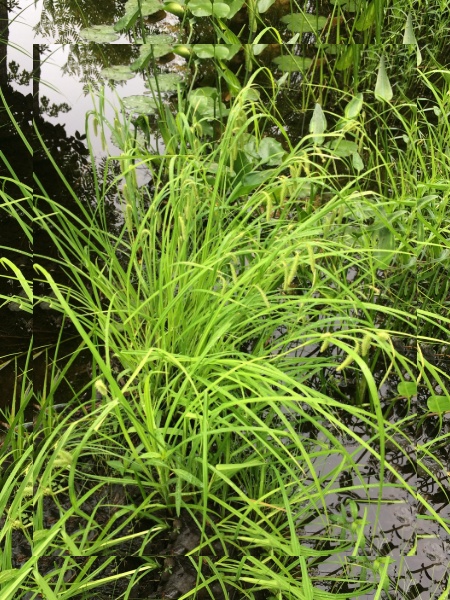
Plant Names

Carex crinita
Fringed Sedge
Carex crépu
Plant Characteristics
Couleur de floraison: Vert
Bloom Period: Jun - Jul
Hauteur max: 3,0 feet
Max Width: 2,0 feet (spreads by rhizome)
Light Condition:
 Plus de 6 heures d'ensoleillement par jour
 More than 2 or 3 hours but less than 6 hours of direct sun a day
Soil conditions:
More than 2 or 3 hours but less than 6 hours of direct sun a day
Soil conditions:
 Tolerates medium soil condition
Plus de 6 heures d'ensoleillement par jour
More than 2 or 3 hours but less than 6 hours of direct sun a day
Tolerates medium soil condition
Lifespan:
Vivace
des plantes qui reviennent année après année
Gardener Experience:
 Spreads by rhizome
 Self-seeding
Spreads by rhizome
Self-seeding
Landscape Uses:
 Souhaitable dans les jardins de zone humide
 Suitable for rain gardens
 Suitable for shoreline rehabilitation
 Suitable for container garden
Souhaitable dans les jardins de zone humide
Suitable for rain gardens
Suitable for shoreline rehabilitation
Suitable for container garden
Ecological Benefits:
No ecological benefits information available.
Tolerates:
 Deer resistant
 Rabbit resistant
 Tolerates limestone conditions
 Tolerates acidic soil conditions
 Tolerates juglone conditions
 Tolerates transplantation
Deer resistant
Rabbit resistant
Tolerates limestone conditions
Tolerates acidic soil conditions
Tolerates juglone conditions
Tolerates transplantation
Special Features and Considerations:
 This plant is a GRASP candidate
This plant is a GRASP candidate
Seed and plant distribution status
No seeds available for this plant.
Nous acceptions les semences de cette plante
Faits intéressants
Fringed Sedges is relatively tall compared to other sedges and produce many long, drooping seedheads. It is a moisture loving plant that tends to grow in low areas or near the shores of ponds or other waterways; it is therefore well suited to wet areas of home gardens or landscapes. It forms attractive clumps and is generally well behaved. The arching seed heads add movement and interest from summer into fall. It spreads gradually rather than aggressively. It tolerates occasional flooding and performs best in consistently moist soil but can tolerate average conditions once established. You can divide established clumps in spring if they become crowded.
Plant Location
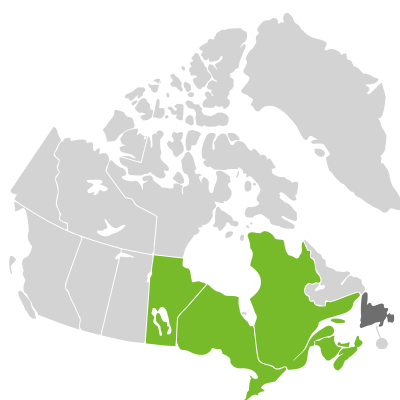
Native to Ottawa region: Oui
Distribution according to VASCAN
Ephemeral
Native
Introduced
Excluded
Extirpated
Doubtful
Absent
 Canadensis

Thrives in Ecozones
- Maritime de l'Atlantique
- Plaines boréales
- Bouclier boréal
- Plaines à forêts mixtes
Ecological Benefits
Butterflies Supported by Carex crinita
No butterfly data available for this plant.
Specialized Bees Supported by Carex crinita
No bee data available for this plant.
Complementary Plants
- Campanulastrum americanum
American Bellflower
Campanule d'Amérique - Eurybia macrophylla
Large-leaved Aster
Aster à grandes feuilles - Nabalus albus
White Rattlesnake-root
Prenanthe blanche - Scrophularia marilandica
Eastern/carpenter's Figwort
Scrofulaire du Maryland - Symphyotrichum urophyllum
Arrow-leaved Aster
Aster urophylle
Substitute For Non-Native Plants
- Pennisetum setaceum (Fountain Grass)
Sowing Information
Download Seed Envelope Labels (PDF)
- Sowing depth: Surface sow
- Sow by February
- Stratification duration: 60 days
- Self-seeding
Harvesting and Seed Sharing
- Harvest start month: July
- Harvesting indicator:
- Seeds easily fall off when you gently pull them off
- Harvesting:
- Utiliser la main pour détacher de la tige principale
- Seed viability test:
- Pas de test requis avant le don
- Packaging measure: A dozen (12) seeds (eyeball)
- Seed storage:
- Sécher à l'air dans un sac en papier ou contenant ouvert, pour quelques jours jusqu'à sec
- Secouer de temps à autre pour prévenir la moisissure
- Cultivar: Yes, do not donate unless you know source, and there are no known cultivars in your garden or at proximity
- No harvesting video available at this time.
Toxicity Notes
Inadequate information on toxicity found.
GRASP Candidate
Overlooked or difficult to grow plants (eg ghost plants, shrubs, trees, complicated germination etc); sapling sitters, seed sitters, skilled germination, growers with right conditions- aiming for local stock; these plants may not be extinct, but overlooked OR support habitat OR support a vulnerable animal/insect.