 Connu comme étant toxique - Toxic to mammals if ingested.
Plant Names

Drymocallis arguta
Tall Wood Beauty
Potentille âcre
Synonyms
tall cinquefoil
tall drymocallis
white cinquefoil
Plant Characteristics
Couleur de floraison: Blanc
Bloom Period: Jun - Sep
Hauteur max: 2,0 feet
Max Width: 1,5 feet (spreads by rhizome)
Light Condition:
 Plus de 6 heures d'ensoleillement par jour
 More than 2 or 3 hours but less than 6 hours of direct sun a day
Soil conditions:
More than 2 or 3 hours but less than 6 hours of direct sun a day
Soil conditions:
 Tolère des conditions de sol sec
 Tolerates medium soil condition
Plus de 6 heures d'ensoleillement par jour
More than 2 or 3 hours but less than 6 hours of direct sun a day
Tolère des conditions de sol sec
Tolerates medium soil condition
Lifespan:
Vivace
des plantes qui reviennent année après année
Gardener Experience:
 Suitable for beginner gardeners
 Ne se propage pas de manière incontrôlable
 Spreads by rhizome
 Facile à germer
 Self-seeding
Suitable for beginner gardeners
Ne se propage pas de manière incontrôlable
Spreads by rhizome
Facile à germer
Self-seeding
Landscape Uses:
 Suitable for rock gardens
 Suitable for Right of Way gardens
 Suitable for school gardens
 Tolerates boulevard garden conditions
Suitable for rock gardens
Suitable for Right of Way gardens
Suitable for school gardens
Tolerates boulevard garden conditions
Ecological Benefits:
No ecological benefits information available.
Tolerates:
 Deer resistant
 Rabbit resistant
 Tolerates transplantation
Deer resistant
Rabbit resistant
Tolerates transplantation
Special Features and Considerations:
Seed and plant distribution status
Semences disponible
Disponible à la table Mi-soleil, sec
Disponible à la table Mi-soleil, sec
Nous acceptions les semences de cette plante
Faits intéressants
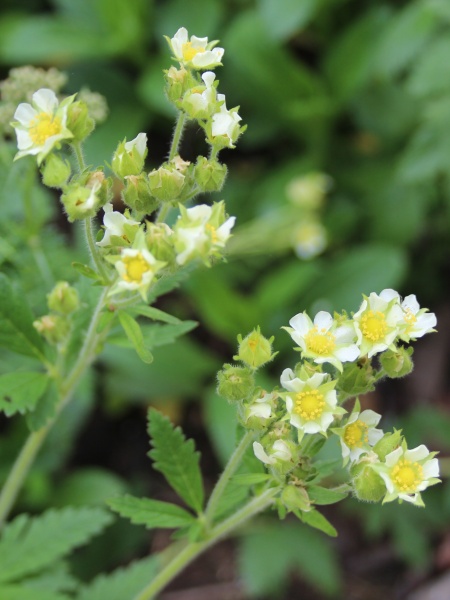
Tall Wood Beauty is a good candidate for dry to mesic soil conditions with its central tap root. It can grow on cliffs, river shore edges and rocky slopes. It does spread by fibrous roots but not aggressively. The small white to light yellow blooms sit atop erect stems.
Plant Location
Distribution according to VASCAN
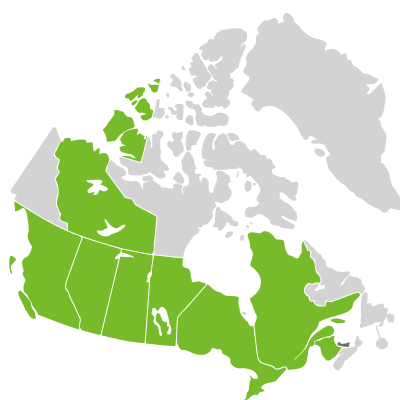
Ephemeral
Native
Introduced
Excluded
Extirpated
Doubtful
Absent
 Canadensis

Thrives in Ecozones
- Taïga des plaines
- Taïga du Bouclier
- Plaines boréales
Ecological Benefits
Butterflies Supported by Drymocallis arguta
No butterfly data available for this plant.
Specialized Bees Supported by Drymocallis arguta
No bee data available for this plant.
Complementary Plants
- Allium stellatum
Autumn Onion
Ail étoilé - Capnoides sempervirens
Pink Corydalis
Corydale toujours verte - Eragrostis spectabilis
Purple Lovegrass
Éragrostide brillante - Liatris cylindracea
Cylindrical Blazing Star
Liatris cylindrique - Monarda punctata
Spotted Beebalm
Monarde ponctuée
Substitute For Non-Native Plants
- Potentilla (Non-Native Potentilla)
Sowing Information
Download Seed Envelope Labels (PDF)
- Sowing depth: Surface sow
- Sow by February
- Stratification duration: 60 days
- Self-seeding
- Notes: Keep moist and cool until sowing.
Harvesting and Seed Sharing
- Harvest start month: August
- Harvesting indicator:
- Pods are brown and slightly open
- Harvesting:
- Cut stem (including pods), let air dry in paper bag, then shake seeds off after a few days
- Seed viability test:
- Pas de test requis avant le don
- Packaging measure: 1 rounded 1/8 teaspoon
- Seed storage:
- Sécher à l'air dans un sac en papier ou contenant ouvert, pour quelques jours jusqu'à sec
- Secouer de temps à autre pour prévenir la moisissure
- Cultivar: No, you can donate without knowing the source as there are only straight species
- No harvesting video available at this time.
Toxicity Notes
Toxic to mammals if ingested.