 Pas connu comme étant toxique - Not likely toxic to mammals.
Plant Names

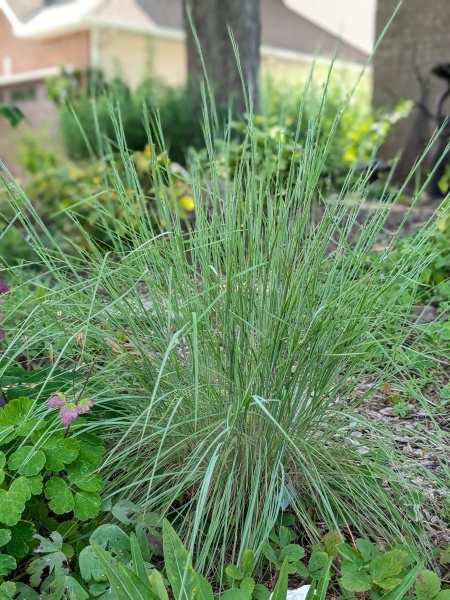
Schizachyrium scoparium
Little Bluestem Grass
Barbon à balais
Synonyms
broom beardgrass
broom bluestem
small bluestem
schizachyrium à balais
Plant Characteristics
Couleur de floraison: Vert
Bloom Period: Jul - Oct
Hauteur max: 3,0 feet
Max Width: 3,0 feet (spreads by rhizome)
Light Condition:
 Plus de 6 heures d'ensoleillement par jour
 More than 2 or 3 hours but less than 6 hours of direct sun a day
Soil conditions:
More than 2 or 3 hours but less than 6 hours of direct sun a day
Soil conditions:
 Tolère des conditions de sol sec
 Tolerates medium soil condition
Plus de 6 heures d'ensoleillement par jour
More than 2 or 3 hours but less than 6 hours of direct sun a day
Tolère des conditions de sol sec
Tolerates medium soil condition
Lifespan:
Vivace
des plantes qui reviennent année après année
Gardener Experience:
 Suitable for beginner gardeners
 Ne se propage pas de manière incontrôlable
 Spreads by rhizome
 Self-seeding
Suitable for beginner gardeners
Ne se propage pas de manière incontrôlable
Spreads by rhizome
Self-seeding
Landscape Uses:
 Suitable for rock gardens
 Suitable for rain gardens
 Suitable for school gardens
 Tolerates boulevard garden conditions
Suitable for rock gardens
Suitable for rain gardens
Suitable for school gardens
Tolerates boulevard garden conditions
Ecological Benefits:
 Supports birds
 Butterfly host
Supports birds
Butterfly host
Tolerates:
 Tolerates salt conditions
 Deer resistant
 Rabbit resistant
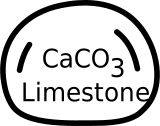 Tolerates limestone conditions
 Tolerates sandy conditions
 Tolerates juglone conditions
 Tolerates transplantation
Tolerates salt conditions
Deer resistant
Rabbit resistant
Tolerates limestone conditions
Tolerates sandy conditions
Tolerates juglone conditions
Tolerates transplantation
Special Features and Considerations:
Seed and plant distribution status
Semences disponible
Disponible à la table Mi-soleil, sec
Disponible à la table Mi-soleil, sec
Nous acceptions les semences de cette plante
Faits intéressants
Little Bluestem forms upright blue-green clumps that turn brilliant shades of copper, orange, and red in autumn. It grows best in average, well-drained soil.
The dense clumps offer shelter for overwintering insects and small wildlife. It is very drought tolerant and does not spread aggressively. It is excellent for prairie gardens and erosion control.
The dense clumps offer shelter for overwintering insects and small wildlife. It is very drought tolerant and does not spread aggressively. It is excellent for prairie gardens and erosion control.
Plant Location
Native to Ottawa region: Oui
Distribution according to VASCAN
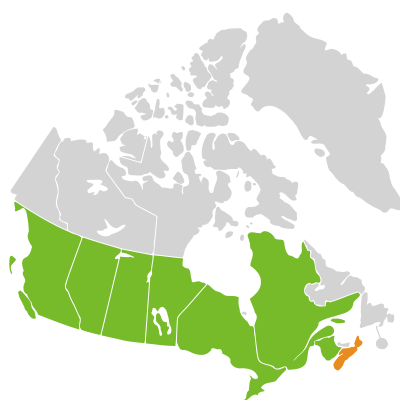
Ephemeral
Native
Introduced
Excluded
Extirpated
Doubtful
Absent
 Canadensis

Thrives in Ecozones
- Plaines boréales
- Prairies
- Bouclier boréal
- Plaines à forêts mixtes
Ecological Benefits
Butterflies Supported by Schizachyrium scoparium
-
Atrytonopsis hianna
Dusted Skipper - Hespérie Pointillée -
Hesperia Leonardus
Leonard’s skipper - Hespérie de Léonard -
Hesperia Sassacus
Indian skipper - Hespérie indienne -
Stereomita Andropogonis
Stereomita Andropogonis
Specialized Bees Supported by Schizachyrium scoparium
No bee data available for this plant.
Complementary Plants
- Anaphalis margaritacea
Pearly Everlasting
Immortelle blanche - Asclepias tuberosa
Butterfly Milkweed
Asclépiade tubéreuse - Liatris spicata
Dense Blazing Star
Liatris à épi - Monarda fistulosa
Wild Bergamot
Monarde fistuleuse - Rudbeckia hirta
Black-eyed Susan
Rudbeckie hérissée
Substitute For Non-Native Plants
- Perovskia Atriplicifolia (Russian Sage)
- Miscanthus (Silvergrass)
- Pennisetum setaceum (Fountain Grass)
Sowing Information
Download Seed Envelope Labels (PDF)
- Sowing depth: Couvrir très légèrement
- Sow anytime
- Stratification duration: 0 days
- Self-seeding
- Notes: Can be sown in late spring in warm soil.
Harvesting and Seed Sharing
- Harvest start month: October
- Harvesting indicator:
- Seeds easily fall off when you gently pull them off
- Harvesting:
- Utiliser la main pour détacher de la tige principale
- Seed viability test:
- Pas de test requis avant le don
- Packaging measure: 1 rounded 1/4 teaspoon
- Seed storage:
- Sécher à l'air dans un sac en papier ou contenant ouvert, pour quelques jours jusqu'à sec
- Secouer de temps à autre pour prévenir la moisissure
- Cultivar: Yes, do not donate unless you know source, and there are no known cultivars in your garden or at proximity
- No harvesting video available at this time.
Toxicity Notes
Not likely toxic to mammals.